
CLASSIFICATION: OPEN SOURCE | PUBLISHED: Apr 29, 2026 | SYSTEM: GET READY
Microsoft AI chief gives it 18 months—for all white-collar work to be automated by AI | Fortune
# Microsoft AI Chief Predicts White-Collar Automation Within 18 Months
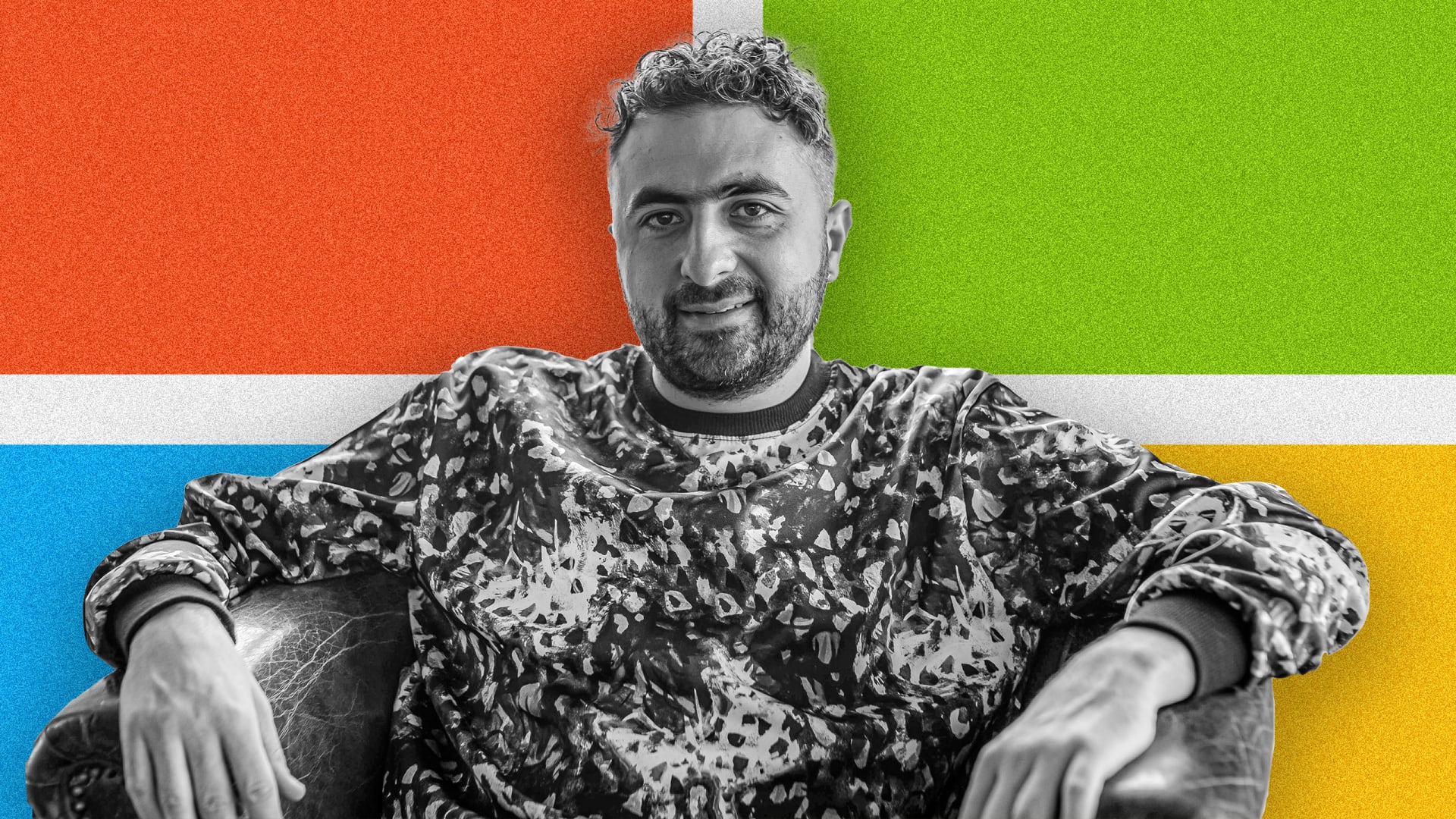
Microsoft AI CEO Mustafa Suleyman predicted in a conversation with the Financial Times that most professional tasks performed at a computer will be fully automated by AI within the next year to 18 months, naming accounting, legal work, marketing, and project management as vulnerable fields.
Suleyman said he expects "human-level performance on most, if not all professional tasks" from AI systems in that timeframe. He cited exponential growth in computational power as the basis for his prediction, adding that as compute advances, models will be able to code better than most human coders. His remarks echoed a viral essay by AI researcher Matt Shumer, a version of which was published at Fortune.com, comparing this moment to February 2020, just before the pandemic reached the United States. Shumer said this disruption will be more dramatic. Both Shumer and OpenAI CEO Sam Altman have written recently about their alarm, even sadness, at watching their own work grow obsolete.
Similar Forecasts From Industry Leaders
The prediction follows a pattern that began in early 2025. Anthropic CEO Dario Amodei warned last May that AI could eliminate half of all entry-level white-collar jobs. Ford CEO Jim Farley said AI would cut in half the number of white-collar jobs in the U.S. In The Atlantic, Josh Tyrangiel argued that the country was unprepared for the coming disruption. SpaceX CEO Elon Musk said in Davos last month that artificial general intelligence, AI matching or exceeding human-level intelligence, could arrive as early as this year.
Current Productivity Data
The data on actual workplace impact tell a more complicated story. A 2025 Thomson Reuters report found that lawyers, accountants, and auditors are experimenting with AI for targeted tasks like document review and routine analysis, but the results have shown only marginal productivity improvements and fall short of signaling mass job displacement.
In some cases, AI has reduced productivity. A recent study from nonprofit Model Evaluation and Threat Research (METR) on AI's impact on software developers found the technology actually made workers' tasks take 20% longer. Research from Apollo Global Management chief economist Torsten Slok found that while profit margins in Big Tech increased by more than 20% in Q4 2025, the broader Bloomberg 500 Index saw almost no change. Slok noted separately that "investors do not believe AI will result in higher earnings outside the tech sector," citing consensus Wall Street expectations for the S&P 500.
Early Signs of Displacement
Some evidence of job losses has appeared. Employment consultancy Challenger, Gray & Christmas reported that about 55,000 job cuts in 2025 were AI-related. Microsoft itself let go of 15,000 workers last year, though the company did not cite AI as a reason for the reductions. In a memo released last July following job eliminations, CEO Satya Nadella said the company must "reimagine our mission for a new era."
Markets have responded sharply to the perceived potential. Software stocks suffered a major selloff last week, which analysts dubbed the "SaaSpocalypse," after Anthropic and OpenAI announced agentic AI systems for enterprises that perform many key functions of software-as-a-service organizations.
Suleyman's Stated Ambitions
Suleyman framed his goals at Microsoft in expansive terms. He said organizations will be able to retrofit AI to perform any required job function. "Creating a new model is going to be like creating a podcast or writing a blog," he said. "It is going to be possible to design an AI that suits your requirements for every institution, organization, and person on the planet."
His stated core mission is to achieve what he called "superintelligence," while also reducing Microsoft AI's reliance on OpenAI in favor of independent foundation models. "This after all is the most important technology of our time," Suleyman said. "We have to develop our own foundation models which are at the absolute frontier."
The gap between the 18-month timeline and what Thomson Reuters, METR, and Apollo Global have documented in the present remains wide. Whether the trajectory closes that gap or the forecasts join a growing archive of premature predictions is, for now, an open question.
ANALYST PROFILE
Priya Nair
Cybersecurity Analyst
Priya Nair spent seven years in signals intelligence before moving to private-sector cybersecurity consulting. She specializes in critical infrastructure attacks, software supply-chain risk, and the intersection of cyber and physical security.