
CLASSIFICATION: OPEN SOURCE | PUBLISHED: Apr 30, 2026 | SYSTEM: GET READY
UAE announces it will leave Opec | GR News
# UAE Announces Withdrawal From OPEC Effective May 1
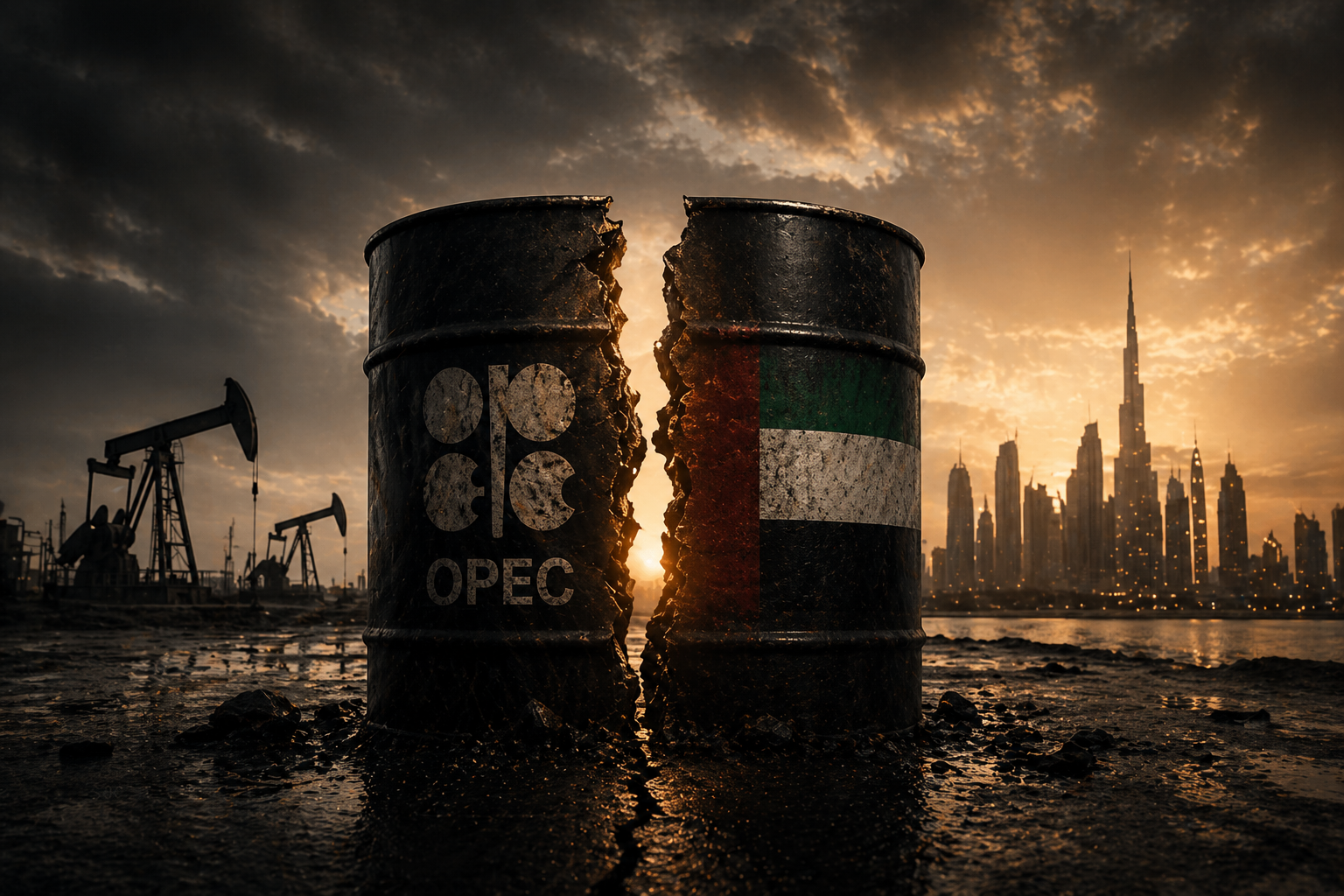
The United Arab Emirates will leave OPEC on May 1 after more than five decades of membership, ending its obligations under both the exporters' group and the broader OPEC+ alliance that includes Russia.
Suhail Al Mazrouei, UAE Minister of Energy and Infrastructure, said in a statement that the decision reflected a "policy-driven evolution aligned with long-term market fundamentals." Dr. Sultan Al Jaber, managing director and group chief executive of Abu Dhabi National Oil Company (Adnoc), wrote on X that the decision was "sovereign" and "in line with its long-term energy strategy, its true production capability and its national interest, as well as global energy market stability."
Production Capacity and Quota Gap
The UAE accounts for roughly 4 percent of global oil production, making it the world's seventh-largest producer. Under its OPEC+ commitments, the country has been producing close to 30 percent below its current production capacity of 4.85 million barrels per day. Following a $150 billion spending program, Adnoc is close to achieving its target of 5 million bpd by 2027, a goal brought forward by three years.
Before the Iran war, the UAE produced 3.4 million bpd. After the closure of the Strait of Hormuz, production fell 44 percent to 1.9 million bpd in March. The UAE's energy ministry said in a statement to the state news agency WAM that the exit followed "a comprehensive review of the UAE's production policy and its current and future capacity and is based on our national interest."
The Iran War's Supply Shock
The Iran conflict wiped out 7.88 million bpd of OPEC production in March, a 27 percent decline that brought the group's output to 20.79 million bpd, according to The National's reporting. That supply loss exceeds the 6.28 million bpd cut recorded in May 2020 during the Covid-19 pandemic, the 1970s oil crisis, and the 1991 Gulf War.
An energy industry source familiar with the decision said the UAE felt it was "the right time to leave Opec." The source described the move as "good for consumers and good for the world," citing historically low global spare capacity following the Hormuz crisis. "The UAE will gradually increase production to supply global markets, once freedom of navigation is restored in the Strait of Hormuz," the source added.
OPEC Membership History
Abu Dhabi joined OPEC in 1967, four years before the founding of the UAE. The country was part of a coalition of Gulf producers instrumental in managing Middle Eastern oil supply, a region responsible for 30 percent of global production. Qatar left OPEC in 2019, citing the irrelevance of membership given its position as a leading gas producer. Bahrain and Oman remain outside OPEC but are aligned with the group's supply management.
Independence from OPEC will help the UAE contribute "effectively to meeting the market's pressing needs," according to the energy ministry. The UAE's crude exports go mostly to Asia, with India, China, and Japan among its key buyers.
The withdrawal leaves OPEC contending simultaneously with the largest supply disruption in its history and the departure of one of its most capacity-rich members.

ANALYST PROFILE
Rachel Thornton
Independent Analyst
Rachel Thornton is an independent analyst covering macroeconomic trends, inflation, and supply chains. Her work focuses on how economic shifts impact everyday stability and long-term risk.